
Introduction: Understanding Blockchain Transaction Throughput Limitations
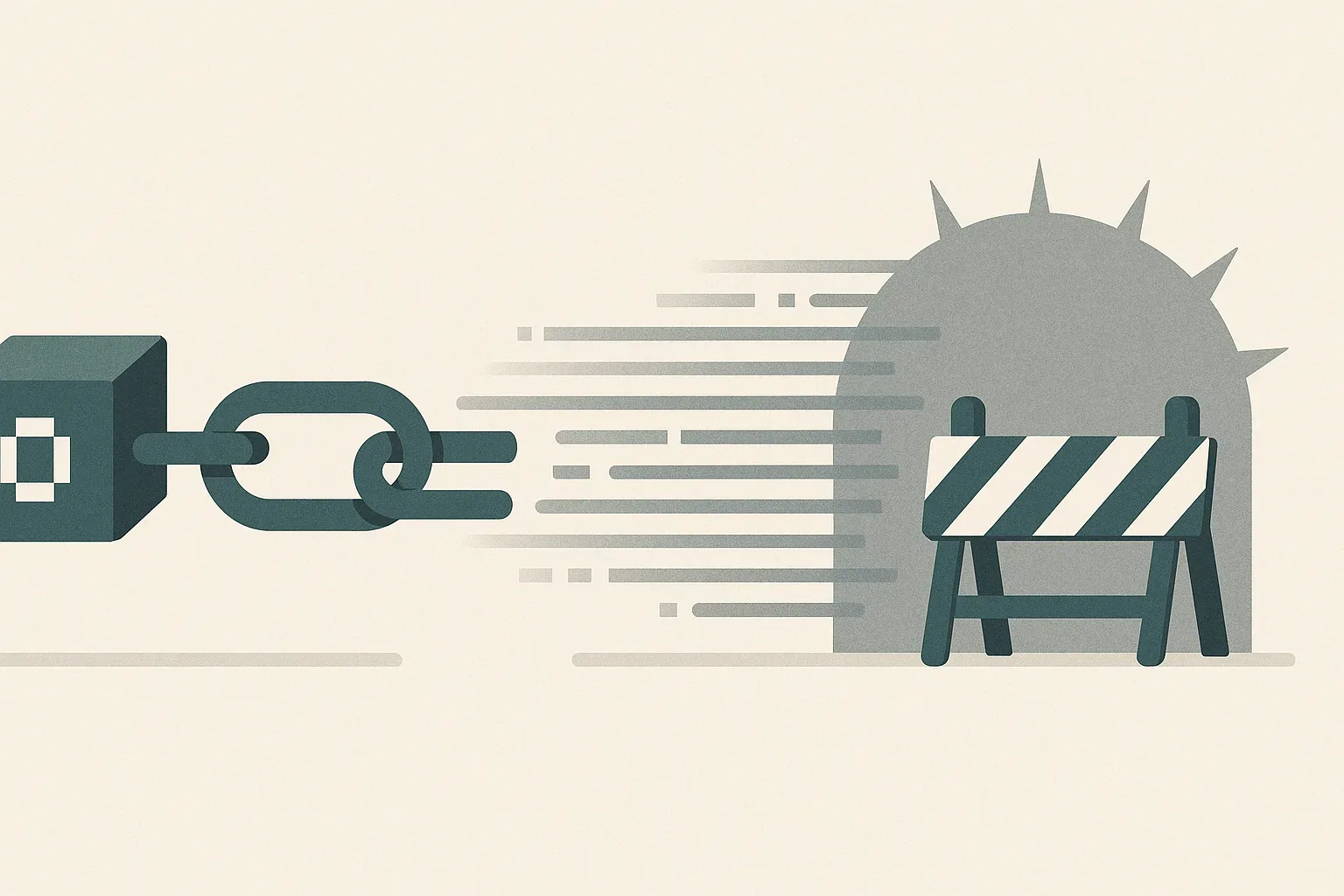
Blockchain technology promised a revolution in digital transactions, offering unprecedented decentralization, transparency, and security. However, as these networks gain wider adoption, a fundamental challenge has come into sharp focus: their limited transaction throughput. Throughput refers to the number of transactions a blockchain can process and confirm per second (TPS). Mainstream payment systems routinely handle thousands or even tens of thousands of TPS, while established blockchains like Bitcoin often process only 3-7 TPS and Ethereum typically manages around 15-30 TPS. This stark difference highlights a critical bottleneck hindering blockchain's potential for global, high-volume applications.
The Core Architectural Constraints: Decentralization, Security, and the Scalability Trilemma
At the heart of blockchain transaction throughput limitations lies a fundamental design philosophy rooted in achieving decentralization and security. The "Blockchain Scalability Trilemma," a concept widely attributed to Ethereum co-founder Vitalik Buterin, posits that a blockchain system can only simultaneously achieve two out of three desirable properties: decentralization, security, and scalability. Most foundational blockchains, particularly Bitcoin and Ethereum (pre-Merge), explicitly prioritize decentralization and security above all else. Decentralization is achieved by distributing the network ledger across thousands of independent nodes globally, ensuring no single entity controls the network. Security is maintained through robust cryptographic mechanisms and energy-intensive consensus protocols like Proof-of-Work, making it economically infeasible to attack the network.
However, this prioritization comes at a cost to scalability, which refers to the system's ability to handle a growing amount of work, specifically a high volume of transactions. To ensure every decentralized node can keep up with the network and verify every transaction, certain limits must be imposed. If transaction volume becomes too high, smaller nodes might struggle to process, store, and propagate blocks, leading to centralization as only powerful entities can participate fully. This delicate balance means that increasing transaction throughput often necessitates compromises in either decentralization or security, creating a continuous challenge for blockchain developers and highlighting the inherent trade-offs in their design.
Key Technical Bottlenecks: Block Size, Consensus Mechanisms, and Network Latency Explained
The most prominent include block size and block time, the nature of consensus mechanisms, and inherent network latency.
Block size and block time define the capacity of a blockchain. Bitcoin, for instance, has a fixed block size limit of approximately 1 MB and an average block time of 10 minutes. If the average transaction size is around 250 bytes, a 1 MB block can only hold about 4,000 transactions. Divided by a 10-minute block time, this yields the often-cited 7 transactions per second (TPS) limit. Ethereum, while not having a fixed block size in the same way, has a 'gas limit' per block, which dictates the total computational work a block can contain. This gas limit, combined with an average block time of around 12-15 seconds (post-Merge, prior to that it was slightly faster), also caps its transaction processing capacity, typically around 15-30 TPS. Expanding block size or reducing block time directly increases throughput but often strains network bandwidth and storage requirements for nodes, potentially compromising decentralization.
Proof-of-Work (PoW), used by Bitcoin and formerly by Ethereum, is inherently slower due to its reliance on a competitive mining process to find a valid block. This ensures security but introduces latency. While Proof-of-Stake (PoS) mechanisms, like Ethereum's current one, can achieve faster block times and thus higher theoretical throughput, they still contend with the need for broad validation and propagation across a decentralized network. The process of achieving transaction finality, or the irreversible confirmation of a transaction, also varies between consensus mechanisms and can impact perceived speed.
Finally, network latency, the time it takes for data to travel across the internet, is an unavoidable physical constraint. For a new block to be validated and propagated across thousands of nodes worldwide, time is required. This propagation delay limits how quickly new blocks can be generated and accepted by the network without risking forks (multiple valid chains), creating a ceiling on potential transaction speeds.
Real-World Impact: How Low Throughput Affects Users and the Crypto Ecosystem
Low transaction throughput is not merely an abstract technical limitation; it has profound and tangible real-world consequences for cryptocurrency users and the broader crypto ecosystem. These impacts manifest primarily in three critical areas: high transaction fees, slow confirmation times, and limited application usability.
During periods of high network demand, when the number of pending transactions exceeds the network's processing capacity, transaction fees skyrocket. Users are forced to pay higher "gas fees" on networks like Ethereum or higher "miner fees" on Bitcoin to incentivize validators or miners to include their transactions in the next available block. This competitive bidding process can make even simple transfers or smart contract interactions prohibitively expensive, sometimes costing tens or even hundreds of dollars for a single transaction. Such costs make micro-transactions impractical and create significant barriers to entry for new users, pricing out those with smaller asset holdings.
When the network is congested, transactions can remain in the mempool (a pool of unconfirmed transactions) for minutes, hours, or even days, waiting for inclusion in a block. This unpredictability and delay create a poor user experience, making blockchain applications feel sluggish and unreliable compared to traditional payment systems. It hinders time-sensitive activities like trading, gaming, or even simple retail payments, where instant or near-instant confirmations are expected.
Complex applications requiring frequent state changes, numerous user interactions, or real-time responsiveness, such as high-frequency decentralized exchanges, large-scale blockchain games, or social media platforms, become economically unviable or technically impossible due to the underlying network's limitations. This stifles innovation and limits the mainstream adoption of blockchain technology.
Layer 1 Scaling Solutions: Enhancing the Base Protocol for Greater Capacity
Layer 1 scaling solutions aim to enhance the transaction processing capacity of the foundational blockchain protocol itself without relying on off-chain systems. These approaches often involve fundamental changes to the blockchain's core architecture or consensus rules. Sharding involves dividing the blockchain into smaller, more manageable segments called "shards." Each shard processes its own subset of transactions and maintains its own state, effectively allowing multiple transactions to be processed in parallel. The main chain, or beacon chain, then coordinates these shards, ensuring overall security and data availability. Ethereum's long term roadmap heavily features sharding as a way to dramatically increase its throughput by distributing the workload across many sub-chains.
Smaller block times can increase the risk of network instability and temporary forks. Bitcoin's community, for example, largely rejected significant block size increases in the past due to these decentralization concerns.
Improvements to consensus mechanisms also fall under Layer 1 scaling. The transition from Proof-of-Work to Proof-of-Stake, as seen with Ethereum's Merge, is a prime example. PoS consensus can achieve faster block finality and theoretically higher throughput by reducing the computational overhead and competitive nature of block production. Other innovations include directed acyclic graph (DAG) based protocols or Byzantine Fault Tolerant (BFT) consensus algorithms, which aim for faster agreement among validators. While these L1 solutions are powerful, they often require complex protocol upgrades, carry risks of network disruption, and must carefully navigate the inherent trade-offs between scalability, decentralization, and security inherent in the trilemma.
Layer 2 Scaling Solutions: Building Off-Chain for Faster, Cheaper Transactions
Layer 2 scaling solutions represent a different paradigm, designed to extend the scalability of a base Layer 1 blockchain by processing transactions off-chain, thereby offloading the computational burden from the main network. These solutions aim to achieve higher throughput and lower transaction costs while still inheriting the security guarantees of the underlying L1. The primary categories of Layer 2 solutions include rollups, state channels, and sidechains.
Rollups are perhaps the most prominent and promising Layer 2 technology. They aggregate (or "roll up") hundreds or thousands of off-chain transactions into a single batch, which is then submitted to the Layer 1 blockchain. Crucially, they post either cryptographic proofs (ZK-Rollups) or all the transaction data (Optimistic Rollups) back to the L1, ensuring the L1 maintains data availability and security. This amortization of L1 transaction costs across many L2 transactions drastically reduces fees and increases throughput. ZK-Rollups use zero-knowledge proofs to cryptographically prove the validity of off-chain transactions, offering immediate L1 finality. Optimistic Rollups assume transactions are valid but include a challenge period during which anyone can submit a fraud proof to revert invalid transactions. For a detailed explanation of how these technologies enhance transaction efficiency, refer to https://maincryptonews.com/blog/rollup-technology-transaction-efficiency.
State channels, such as Bitcoin's Lightning Network or Ethereum's Raiden Network, allow participants to conduct an arbitrary number of transactions off-chain, with only the opening and closing states recorded on the L1. This enables extremely fast and cheap transactions between participants once a channel is established. However, they are best suited for direct, repeated interactions between specific parties.
Sidechains are independent blockchains that run parallel to the main L1 chain. They have their own consensus mechanisms and often offer greater flexibility and higher throughput than the L1. Assets can be moved between the L1 and the sidechain through a two-way peg. However, sidechains often have their own security model, which may not be as robust as the L1, and their decentralization can vary. Examples include Polygon PoS and Ronin. Each Layer 2 solution offers a unique balance of speed, cost, security, and decentralization, allowing developers to choose the most appropriate scaling strategy for their specific application needs.
Navigating the Trade-offs: Security, Decentralization, and Efficiency in Scaling Efforts
Efforts to increase blockchain transaction throughput are invariably intertwined with the fundamental trade-offs inherent in the blockchain trilemma: security, decentralization, and efficiency (scalability). Every scaling solution, whether Layer 1 or Layer 2, implicitly or explicitly prioritizes certain aspects at the expense of others, creating a complex landscape of design choices and compromises.
Layer 1 scaling solutions, such as increasing block size or reducing block times, directly address efficiency. However, pushing these parameters too far can negatively impact decentralization. Larger blocks require more powerful hardware, higher bandwidth, and greater storage capacity for nodes to participate effectively, potentially leading to fewer full nodes and a more centralized network. This makes the network more vulnerable to attacks or censorship by a smaller number of powerful entities. Similarly, highly performant, but complex, consensus mechanisms might be harder for a broad base of users to understand or run, leading to greater reliance on expert validators. The goal is to find an optimal balance that enhances throughput without significantly eroding the core tenets of a blockchain's trustless and permissionless nature.
Layer 2 solutions, while offering impressive gains in efficiency, also come with their own set of trade-offs. Rollups, particularly Optimistic Rollups, introduce a 'challenge period' which means finality to the L1 can take days, impacting user experience. ZK-Rollups offer faster finality but are computationally intensive, requiring significant resources to generate proofs, which can also be a point of centralization if only a few powerful entities can generate them. Sidechains, by operating their own consensus, often have a different, potentially weaker, security model than the underlying Layer 1. While state channels offer instant settlement, they require participants to lock funds and are often limited to specific pairs of users. The key challenge for blockchain architects is to design systems where these trade-offs are acceptable for the intended use case, often by ensuring the core security and decentralization remain anchored to the robust Layer 1, while offloading high-volume operations to more efficient, but potentially less decentralized or secure, Layer 2s.
The Future of Blockchain Throughput: Innovations and the Path Ahead
The quest for enhanced blockchain transaction throughput is an ongoing journey, marked by relentless innovation and an evolving understanding of distributed systems. The future of blockchain scalability is likely to be multi-faceted, combining advancements across both Layer 1 and Layer 2 technologies, alongside entirely new architectural paradigms.
On the Layer 1 front, research and development continue into more efficient consensus mechanisms, such as various forms of Proof-of-Stake and other novel approaches that prioritize faster finality and higher transaction rates without sacrificing decentralization. Sharding, particularly for Ethereum, remains a critical long term strategy, aiming to parallelize transaction processing and dramatically increase the network's base capacity.
Layer 2 solutions, especially rollups, are expected to mature significantly. We are seeing rapid advancements in ZK-Rollup technology, with the development of ZK-EVMs (zero-knowledge Ethereum Virtual Machines) promising full compatibility with Ethereum's smart contracts while offering the highest security guarantees and faster finality. The focus is also shifting towards making rollups more decentralized, addressing the potential centralization of sequencers (the entities that batch and submit transactions to L1). Interoperability between different rollups and between Layer 2s and the Layer 1 is another critical area of development, aiming to create a seamless user experience across a fragmented ecosystem.
Beyond these, the concept of modular blockchains is gaining traction. This involves separating the core functions of a blockchain – execution, settlement, consensus, and data availability – into distinct layers or specialized chains. Projects developing dedicated data availability layers (e.g., Celestia, EigenLayer) could further reduce the cost and increase the efficiency of rollups by providing cheaper storage for transaction data. This modular approach allows each component to be optimized for its specific task, potentially leading to unprecedented levels of scalability. The path ahead envisions a highly scalable future where a robust, secure, and decentralized Layer 1 serves as a settlement and data availability layer, supporting a vibrant ecosystem of high-throughput Layer 2s and specialized execution environments, ultimately unlocking blockchain's full potential for mass adoption and complex applications.
What are the core technical reasons why blockchain transaction speeds are limited?
Blockchain transaction speeds are fundamentally limited by a combination of block size/gas limits, block time, and consensus mechanisms. Bitcoin, for instance, has a 1MB block limit and 10-minute block time, restricting it to roughly 7 transactions per second (TPS). Ethereum's gas limit per block and ~12-second block time cap it at 15-30 TPS. Proof-of-Work consensus, historically used by both, is inherently slower due to the competitive, energy-intensive process of finding new blocks. Network latency also plays a role, as blocks need time to propagate across thousands of decentralized nodes globally for verification, preventing excessively fast block production without risking forks and instability.
How does low transaction throughput manifest for the average cryptocurrency user (e.g., fees, confirmation times)?
For the average cryptocurrency user, low transaction throughput manifests primarily as high transaction fees and slow confirmation times. During periods of network congestion, when demand for block space outstrips supply, users must pay significantly higher fees (gas on Ethereum, miner fees on Bitcoin) to have their transactions processed promptly. This can make simple transactions prohibitively expensive. Additionally, transactions can remain unconfirmed in the mempool for minutes, hours, or even longer, leading to a frustrating user experience, failed transactions, and delays in accessing funds or interacting with decentralized applications, making the network feel sluggish and unreliable.
What is the "Blockchain Scalability Trilemma" and how does it relate to throughput challenges?
The "Blockchain Scalability Trilemma" posits that a decentralized blockchain system can only achieve two out of three desirable properties simultaneously: decentralization, security, and scalability. Most foundational blockchains, like Bitcoin and early Ethereum, prioritized decentralization and security. This deliberate choice means they inherently sacrifice scalability, leading directly to throughput challenges. To maintain a highly decentralized network where all nodes can participate and a secure network resistant to attacks, constraints must be placed on transaction volume. Increasing throughput without careful design risks either compromising the network's decentralization (e.g., by making it too demanding for average users to run a node) or its security (e.g., by creating vulnerabilities for faster block production).
What are the primary categories of solutions (e.g., Layer 1, Layer 2) being developed to overcome these limitations?
The primary categories of solutions developed to overcome blockchain transaction throughput limitations are Layer 1 (L1) and Layer 2 (L2) scaling solutions. L1 solutions enhance the base protocol directly, through methods like sharding (dividing the blockchain into parallel segments), increasing block size/reducing block times (with decentralization trade-offs), and improving consensus mechanisms (e.g., Proof-of-Stake). L2 solutions build on top of the L1 to process transactions off-chain, inheriting L1 security. These include rollups (Optimistic and ZK-Rollups, which batch transactions and post proofs to L1), state channels (for direct, rapid off-chain transactions between parties), and sidechains (independent blockchains with their own consensus, bridged to the L1).
What trade-offs are involved when attempting to increase blockchain transaction throughput?
Attempting to increase blockchain transaction throughput inevitably involves trade-offs, primarily revolving around the Blockchain Scalability Trilemma: security, decentralization, and scalability. For Layer 1 solutions, increasing block size might boost throughput but can centralize the network as fewer powerful nodes can afford to process and store larger data. Faster block times can compromise security by increasing the risk of network forks. For Layer 2 solutions, while they achieve high throughput, some introduce delays (Optimistic Rollups' challenge period), rely on potentially more centralized operators (sequencers), or have their own security models that may not be as robust as the Layer 1 (sidechains). The challenge is to optimize throughput while minimizing compromises to the fundamental security and decentralization that define blockchain's value proposition.